Website Redesign Checklist: 25 Things to Fix Before You Relaunch
A 25-point website redesign checklist covering goals, content, design, SEO, redirects, AI search, testing and launch, so your new site keeps its traffic.

A website redesign checklist makes sure your new site improves results without losing the traffic and rankings you already have. The essentials: set a clear goal, audit what works today, map every old URL to a new one, rewrite content around customer questions, design for mobile first, set up SEO and structured data, test everything on real devices and track leads after launch.
Key takeaways
- Benchmark current traffic and leads before changing anything.
- 301 redirects for every changed URL are non-negotiable.
- Rewrite content around customer questions, not internal jargon.
- Test forms, booking and checkout on real phones before launch.
In this guide
What should you do before the redesign starts?
- Set one main goal. More calls, more bookings, more sales or easier updates.
- Benchmark today. Record monthly visitors, leads, top pages and conversion rate.
- List your top-ranking pages. Use Google Search Console to see which pages earn clicks.
- Collect customer questions. Ask your team what people ask before buying.
- Review competitors. Note what is clearer, faster or more convincing than your site.
What should you fix in your content?
- Rewrite the homepage headline in plain words: what you do and for whom.
- Give each service its own page with FAQs and price signals.
- Add proof: reviews, case studies, before and after.
- Cut or merge thin pages. Short duplicate pages compete with each other.
- Add a direct answer near the top of key pages, then the detail.
What should you fix in your design?
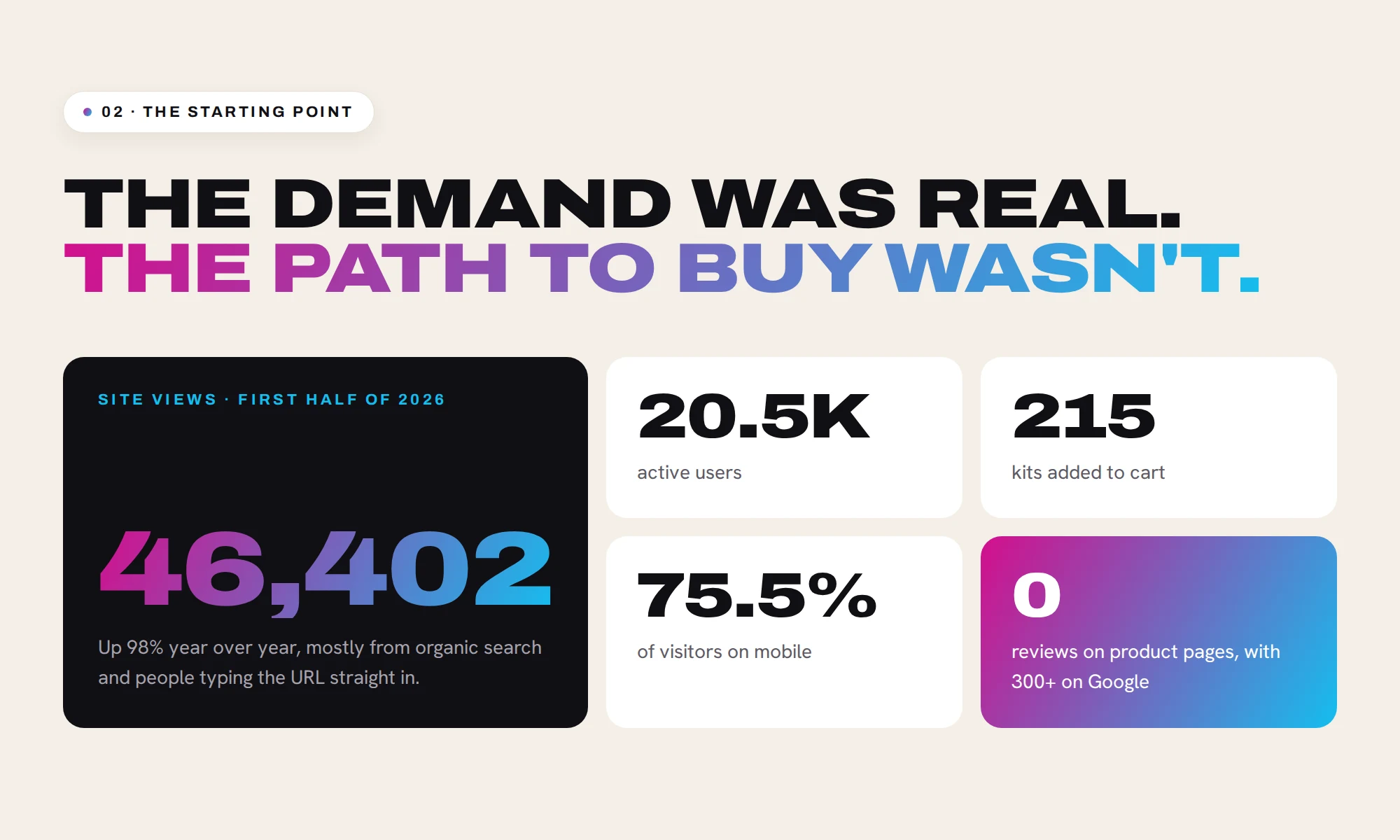
- Design mobile first. On many small business sites, phones are the majority. For Crush Customs, it was 75.5 percent.
- Use one primary call to action per page.
- Make the brand consistent with your guidelines. See brand guidelines.
- Check contrast and font sizes for readability.
- Add interactive tools only where they help decisions, like the map we built for Ju Sells ATL.
What SEO and AI search steps should you include?
- Map every old URL to a new URL and set up 301 redirects.
- Write unique titles and meta descriptions for every page.
- Use question-style headings where they fit.
- Add structured data for your organization, services, articles and FAQs.
- Link related pages to each other so visitors and crawlers find the next step.
- Allow search and AI crawlers in robots.txt, including Bingbot, which also powers some AI search tools. Quillly explains how IndexNow and Bing indexing connect to ChatGPT search.
What should you test before launch?
- Test forms, booking and checkout on real iPhone and Android devices.
- Check page speed on mobile.
- Connect forms to your email platform so every lead gets a follow-up. See welcome email sequence.
What should you do after launch?
- Submit your sitemap and monitor for 30 days. Watch Search Console for errors, compare leads to your benchmark and fix what breaks.
The most expensive mistake: launching a redesign without redirects. Old links break, rankings drop and it can take months to recover.
Should you redesign or just refresh?
If your structure and platform work and the design is just dated, a refresh is faster. If the site is hard to update, broken on phones or built on the wrong platform, rebuild. Platform options are in Webflow vs Squarespace vs WordPress. Our Digital Refresh rebuilds up to five pages for $3,000 flat in two weeks.
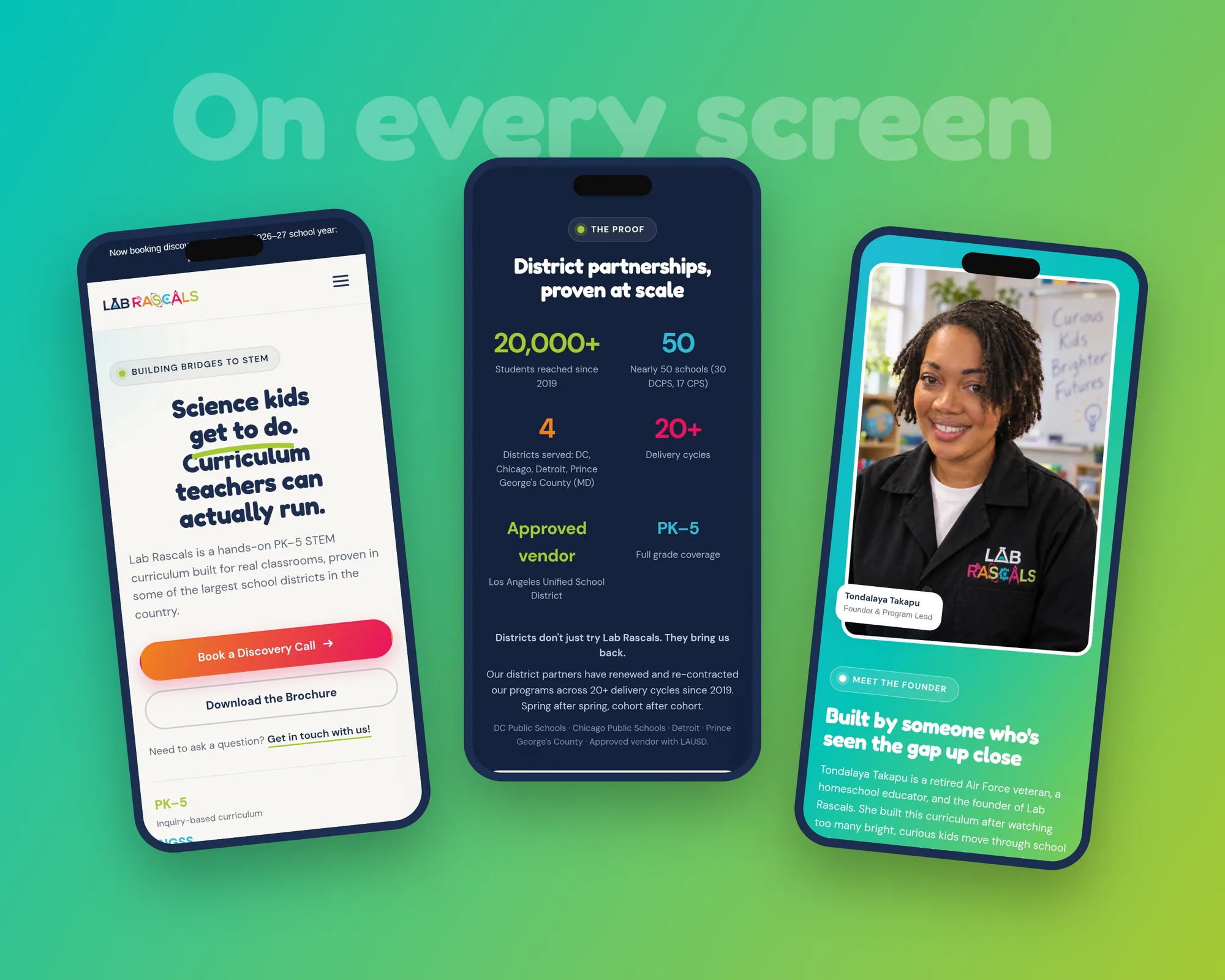
Not sure if you need a redesign? Read 9 signs your website is costing you customers. For budgeting, see website costs, and for the full process, the small business website design guide. For an example of a Webflow build for a specialist audience, see Lab Rascals.
Frequently asked questions
How do I redesign my website without losing SEO?
Keep URLs where possible, set up 301 redirects for any that change, keep content on pages that already rank, and submit your new sitemap to Google Search Console and Bing Webmaster Tools.
How long does a website redesign take?
A focused redesign of up to five pages can take about two weeks. Larger sites typically take six to twelve weeks.
How often should a small business redesign its website?
Many businesses redesign every three to five years, with smaller updates in between. Redesign sooner if leads drop or the site fails on mobile.
What is a 301 redirect?
A 301 redirect permanently sends visitors and search engines from an old URL to a new one, passing along most of the old page's search value.
Keep reading
Small Business Website Design: The Complete Guide (2027) Everything small businesses need to plan, design and launch a website that converts in 2027: pages, platforms, cost, SEO, AI search and mobile.
9 Signs Your Website Is Costing You Customers Nine clear signs your small business website is losing you customers, from slow mobile pages to vague headlines, and what to fix first.
How Much Does a Small Business Website Cost in 2027? Small business website costs in 2027: DIY, freelancer and agency price ranges, ongoing costs, what drives price and how to budget for a site that converts.
Webflow vs Squarespace vs WordPress for Small Businesses Webflow vs Squarespace vs WordPress compared for small businesses: design, ease of use, SEO, ecommerce, cost and which platform fits your goals.
Want a website that earns its keep?
We design and build on Webflow, Shopify and WordPress. Our Digital Refresh is $3,000 flat for up to five pages, live in two weeks.

Erika Gardner, Founder and Chief Strategist, The Vibe Curator co.
Erika Gardner founded The Vibe Curator co. in 2016. She leads brand strategy, websites, email and SMS, and fractional CMO work for growing brands from offices in Houston and Atlanta.
Read Also


