Email and SMS Marketing for Small Businesses: The Complete Guide
How small businesses can build email and SMS marketing that drives revenue: list growth, automated flows, campaigns, consent, benchmarks and costs.

Email and SMS marketing let a small business reach customers directly, without depending on algorithms. The highest-return approach is to build automated flows first (welcome, abandoned cart or inquiry follow-up, post-purchase and win-back), then add regular campaigns. Collect clear consent, especially for texts, measure revenue and clicks rather than opens, and keep SMS for timely, high-value messages.
Key takeaways
- Automated flows drive outsized revenue: in Klaviyo's 2026 benchmarks, flows earned about 41 percent of email revenue from 5.3 percent of sends.
- Start with a welcome series, then cart or inquiry follow-up, post-purchase and win-back.
- Use email for depth and SMS for urgency. Most brands need both.
- SMS marketing requires prior express written consent and clear opt-out instructions.
- Measure clicks, conversions and revenue per recipient, not open rates.
In this guide
- Why do email and SMS still matter so much?
- What should a small business set up first?
- Should you use email, SMS or both?
- How do you grow an email and SMS list?
- What are the consent rules for SMS?
- What should you send in regular campaigns?
- How do you measure email and SMS performance?
- Which platform should you use?
- How much does email and SMS marketing cost?
- Frequently asked questions
Why do email and SMS still matter so much?
You own your list. Social platforms change their algorithms, ad costs rise and search results shift, but an email or SMS list lets you reach customers on your schedule. The return can be strong when it is measured. In Litmus's State of Email research, 35 percent of companies reported $10 to $36 back for every $1 spent, 30 percent reported $36 to $50 and 5 percent reported more than $50. Notably, 21 percent did not measure email ROI at all.
About that famous $36 for every $1: it comes from 2020 research. Current data shows a wide range, and your result depends on your list, offer and automation. Measure your own.
What should a small business set up first?
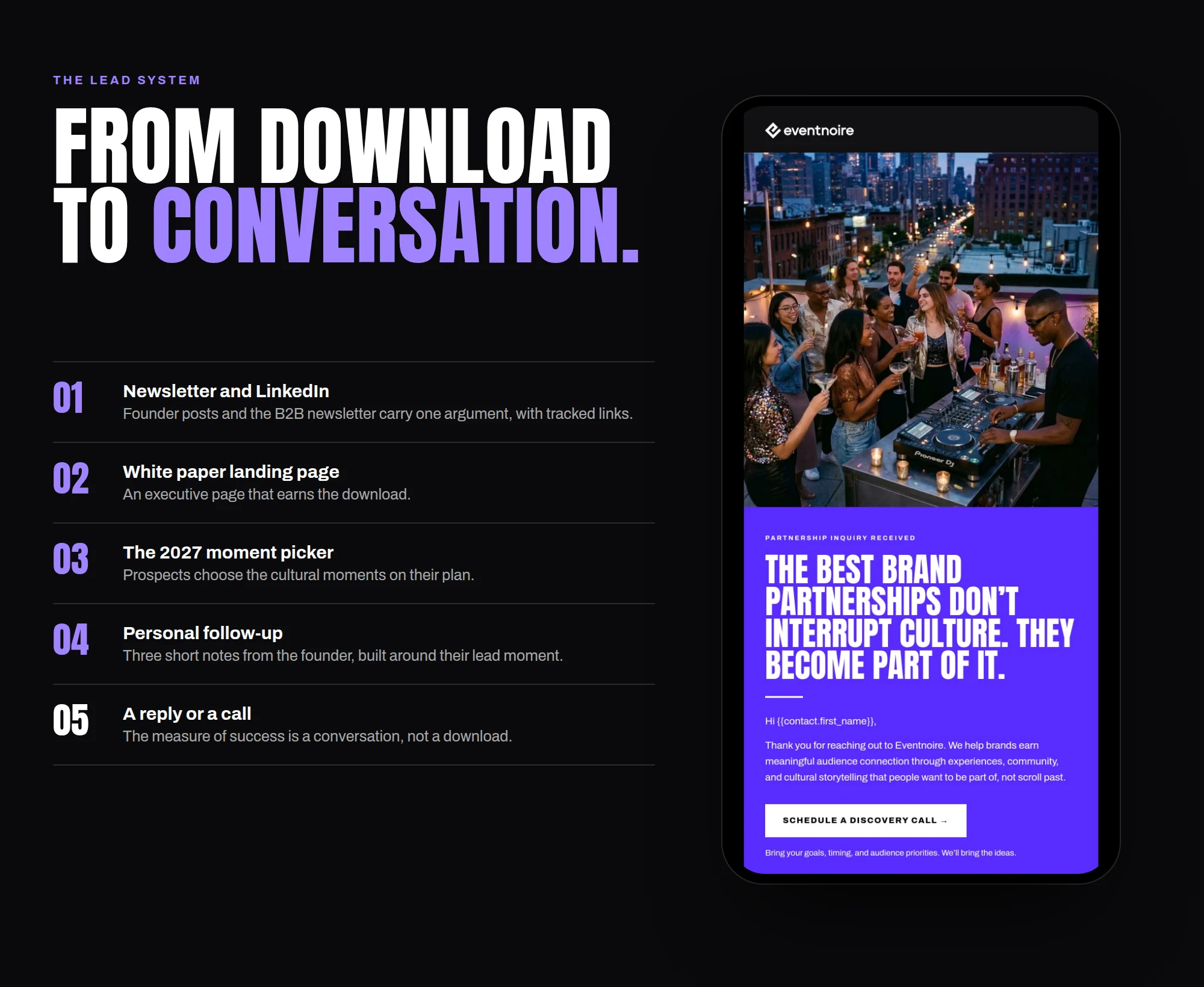
Automations, because they work every day without you. Klaviyo's 2026 email benchmarks found that flows generate nearly 41 percent of email revenue from just 5.3 percent of sends, with revenue per recipient nearly 18 times higher than campaigns. Nearly 48 percent of flow revenue came from new buyers.
| Flow | Triggered by | Job |
|---|---|---|
| Welcome series | New subscriber | Introduce the brand, earn the first purchase or call |
| Abandoned cart or browse | Left without buying | Recover lost sales |
| Inquiry follow-up | Form submission | Respond instantly, book the call |
| Post-purchase | Order or completed service | Onboard, review request, cross-sell |
| Win-back | No activity in 60 to 120 days | Re-engage or clean the list |
Start with the welcome series. Our welcome email sequence template gives you five emails to adapt.
The goal is a system your team understands and can run, not a black box only an agency can operate.
Should you use email, SMS or both?
Both, for different jobs. Email is better for storytelling, education and longer offers. SMS is better for time-sensitive messages like drops, reminders and shipping updates. In Klaviyo's SMS benchmarks, SMS campaigns averaged a 5.6 percent click rate and SMS flows 9.65 percent, while email campaigns averaged about 1.69 percent. Texts are also more personal, so overuse leads to fast opt-outs. Full comparison in email vs SMS marketing.
How do you grow an email and SMS list?
- A clear reason to join. Early access, a guide, a first-order offer or a members-only perk.
- Sign-up forms in the right places. Homepage, product pages, footer and exit intent.
- Two-step capture. Ask for email first, then phone for SMS with separate consent.
- In-person capture. QR codes at events and checkout. See experiential marketing ideas.
- Social traffic. Link-in-bio offers from TikTok and Instagram.
Never buy lists. They hurt deliverability and, for SMS, can violate the law.
What are the consent rules for SMS?
In the U.S., marketing texts require prior express written consent, a clear disclosure of who is texting and how often, and an easy way to opt out. Quiet hours and new FCC opt-out rules also apply. Damages under the TCPA can reach $500 to $1,500 per message, according to Klaviyo's compliance guide. Read our plain-language summary in SMS marketing rules for small businesses. It is not legal advice, so have your attorney review your setup.
What should you send in regular campaigns?
- New products, services or availability
- Stories: customers, behind the scenes, the founder's point of view
- Education: how to use, how to choose, what to avoid
- Offers, used sparingly so they keep their value
- Community: events, collaborations and local news
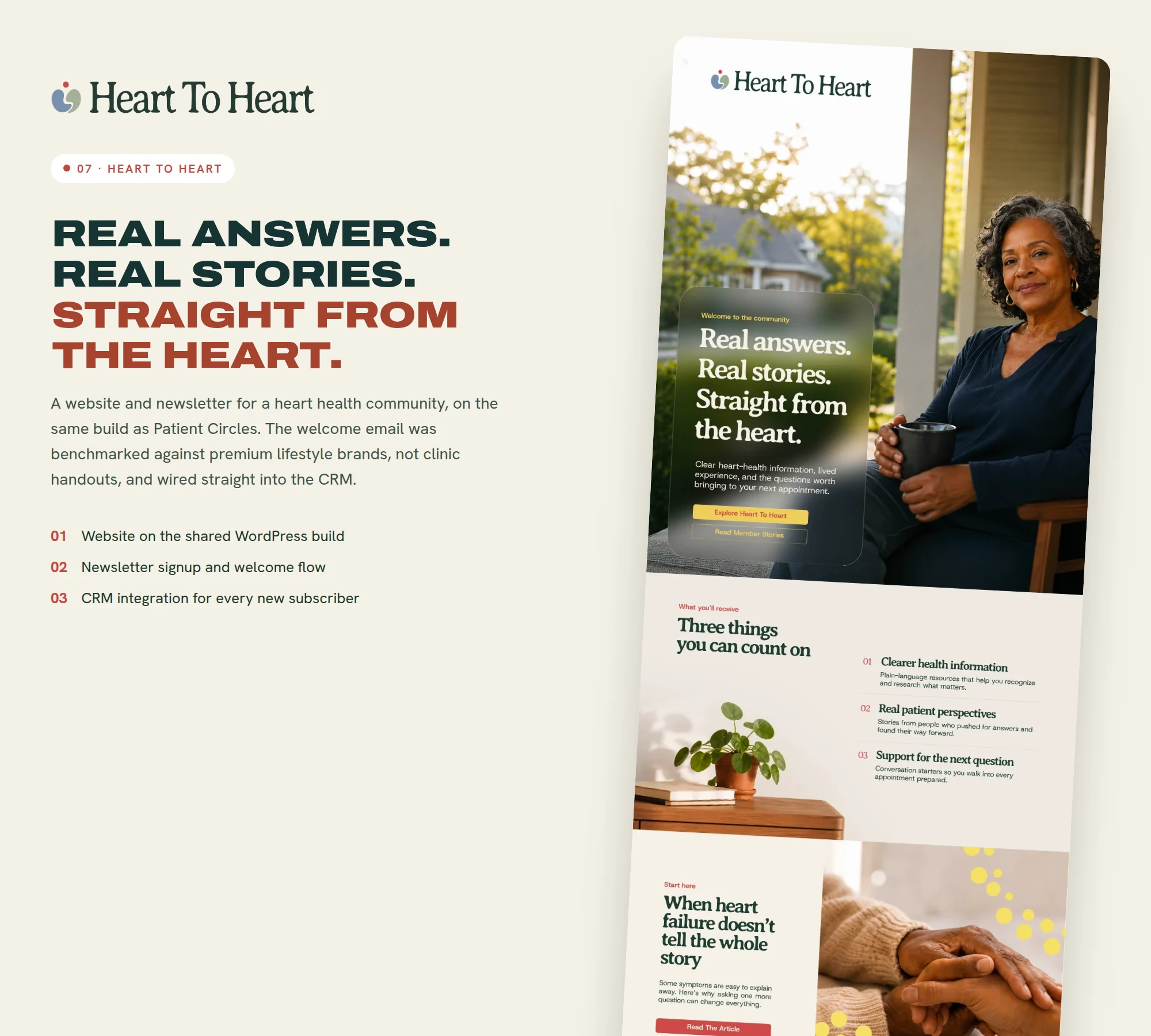
For MD Newsline's Patient Circles, we built the Heart to Heart newsletter with a welcome email connected to the CRM, so every new reader got a consistent introduction before the regular issues began.
How do you measure email and SMS performance?
- Click rate and conversion rate, not opens. Privacy features inflate email open rates, and SMS opens cannot be measured at all.
- Revenue per recipient for ecommerce
- Booked calls or appointments for service businesses
- List growth and unsubscribe or opt-out rate
Be skeptical of the "98 percent SMS open rate" claim. SMS.to notes that the figure cannot be traced to a reliable original source.
Which platform should you use?
We build most programs in ActiveCampaign or the platform you already use. Klaviyo is strong for ecommerce. The best platform is the one connected to your website, store and CRM so automations trigger correctly. If your website forms are not connected to anything, start there. See signs your website is costing you customers.
How much does email and SMS marketing cost?
Platform fees run from free tiers to a few hundred dollars a month as your list grows. Agency management typically adds a monthly retainer. Ours runs $1,500 to $4,000 a month depending on channels, volume and automation depth. Full breakdown in how much email and SMS marketing cost.
For appointment-based businesses, see med spa marketing for treatment-interval reminders, and beauty brand marketing for replenishment flows. Compare channels in email vs SMS.
Frequently asked questions
What is the best email marketing platform for small businesses?
It depends on your setup. ActiveCampaign works well for service businesses and CRM-heavy workflows, Klaviyo for ecommerce, and many platforms offer free tiers for small lists. Choose the one that connects cleanly to your website and sales tools.
How often should a small business send marketing emails?
Once a week to twice a month works for most small businesses, plus automated flows. Consistency matters more than frequency.
Is SMS marketing legal for small businesses?
Yes, with prior express written consent, clear disclosures and an easy opt-out. Rules vary by state, so have an attorney review your consent language.
What is a good email click rate?
Klaviyo's 2026 benchmarks put average email campaign click rates around 1.69 percent and flow click rates around 5.58 percent. Compare yourself to your own past results and your industry.
Should I start with email or SMS?
Start with email and a welcome series. Add SMS once you have a steady flow of subscribers and timely reasons to text.
Keep reading
Email vs SMS Marketing: Which One Should You Start With? Email vs SMS marketing compared for small businesses: click rates, costs, consent, best uses and how to combine both channels without annoying customers.
Welcome Email Sequence: Examples and a 5-Email Template A proven 5-email welcome sequence template for small businesses, with timing, subject line ideas, examples and benchmarks for clicks and revenue.
How Much Do Email and SMS Marketing Cost? Email and SMS marketing costs for small businesses: platform fees, per-text costs, agency retainers and how to budget for a program that pays for itself.
SMS Marketing Rules for Small Businesses: Consent Basics Plain-language U.S. SMS marketing rules for small businesses: TCPA consent, disclosures, quiet hours, opt-outs and the 2026 FCC update. Not legal advice.
Want email and SMS that sell while you sleep?
Our email and SMS programs run $1,500 to $4,000 a month and start with the automated flows that drive the most revenue.

Erika Gardner, Founder and Chief Strategist, The Vibe Curator co.
Erika Gardner founded The Vibe Curator co. in 2016. She leads brand strategy, websites, email and SMS, and fractional CMO work for growing brands from offices in Houston and Atlanta.
Read Also


