Email vs SMS Marketing: Which One Should You Start With?
Email vs SMS marketing compared for small businesses: click rates, costs, consent, best uses and how to combine both channels without annoying customers.

Email is better for storytelling, education and detailed offers, and it costs less per message. SMS is better for urgent, short, high-value messages like drops, reminders and order updates, and it earns higher click rates. Most small businesses should start with email and an automated welcome series, then add SMS for time-sensitive moments once they have consented subscribers.
Key takeaways
- SMS campaigns averaged a 5.6 percent click rate vs about 1.69 percent for email campaigns in Klaviyo benchmarks.
- Email costs less per send and handles longer content.
- SMS needs prior express written consent and stricter frequency discipline.
- The best programs use email for depth and SMS for urgency.
In this guide
- How do email and SMS compare?
- When is email the better choice?
- When is SMS the better choice?
- Why should you ignore SMS open rates?
- How do you combine email and SMS without annoying people?
- Which should a small business start with?
- What about Gen Z?
- How much does each channel cost?
- Frequently asked questions
How do email and SMS compare?
| SMS | ||
|---|---|---|
| Average campaign click rate | About 1.69 percent | About 5.6 percent |
| Average automated flow click rate | About 5.58 percent | About 9.65 percent |
| Cost per message | Fractions of a cent | Usually a cent or more per segment |
| Content length | Long-form, images, stories | Short, one message, one link |
| Consent | Opt-in, with unsubscribe in every email | Prior express written consent |
| Best for | Education, stories, newsletters, offers | Drops, reminders, urgency, VIP perks |
Click-rate figures come from Klaviyo's SMS benchmarks and Klaviyo's email benchmarks. The top 10 percent of SMS programs reached 10.44 percent click rates on campaigns and 16.6 percent on flows, as summarized by SMS.to.
When is email the better choice?
- Welcoming and educating new subscribers
- Telling your brand story or a customer story
- Newsletters and content
- Offers with details, comparisons or multiple products
- B2B and service businesses with longer decisions
When is SMS the better choice?
- Limited drops and flash sales
- Appointment and event reminders
- Abandoned cart nudges
- Shipping and order updates
- VIP early access
Why should you ignore SMS open rates?
You will see "98 percent of texts are opened" everywhere. SMS.to points out that the figure has no traceable original source, and SMS opens cannot be measured. Use clicks, conversions and revenue instead.
How do you combine email and SMS without annoying people?
- Do not send the same message on both channels. Use SMS as a short nudge to an email or landing page.
- Set frequency rules. Two to four marketing texts a month is a common ceiling for small brands.
- Respect quiet hours. No marketing texts before 8 a.m. or after 9 p.m. in the recipient's time zone. See SMS marketing rules.
- Let people choose. Offer email only, SMS only or both.
- Use SMS in flows first. Flows are timely by design, which is why their click rates are higher.
Which should a small business start with?
Our stance: start with email. It is cheaper, lower risk and builds the foundation. Set up a welcome email sequence and your other core flows, then add SMS once you have steady sign-ups and a clear timely reason to text. Retail and ecommerce brands with drops may add SMS sooner. Service businesses often use SMS mostly for reminders.
What about Gen Z?
Younger customers often prefer texts for timely updates and drops, but they are also quick to opt out of messages that feel spammy. Make SMS feel like a perk. More in how to market to Gen Z.
How much does each channel cost?
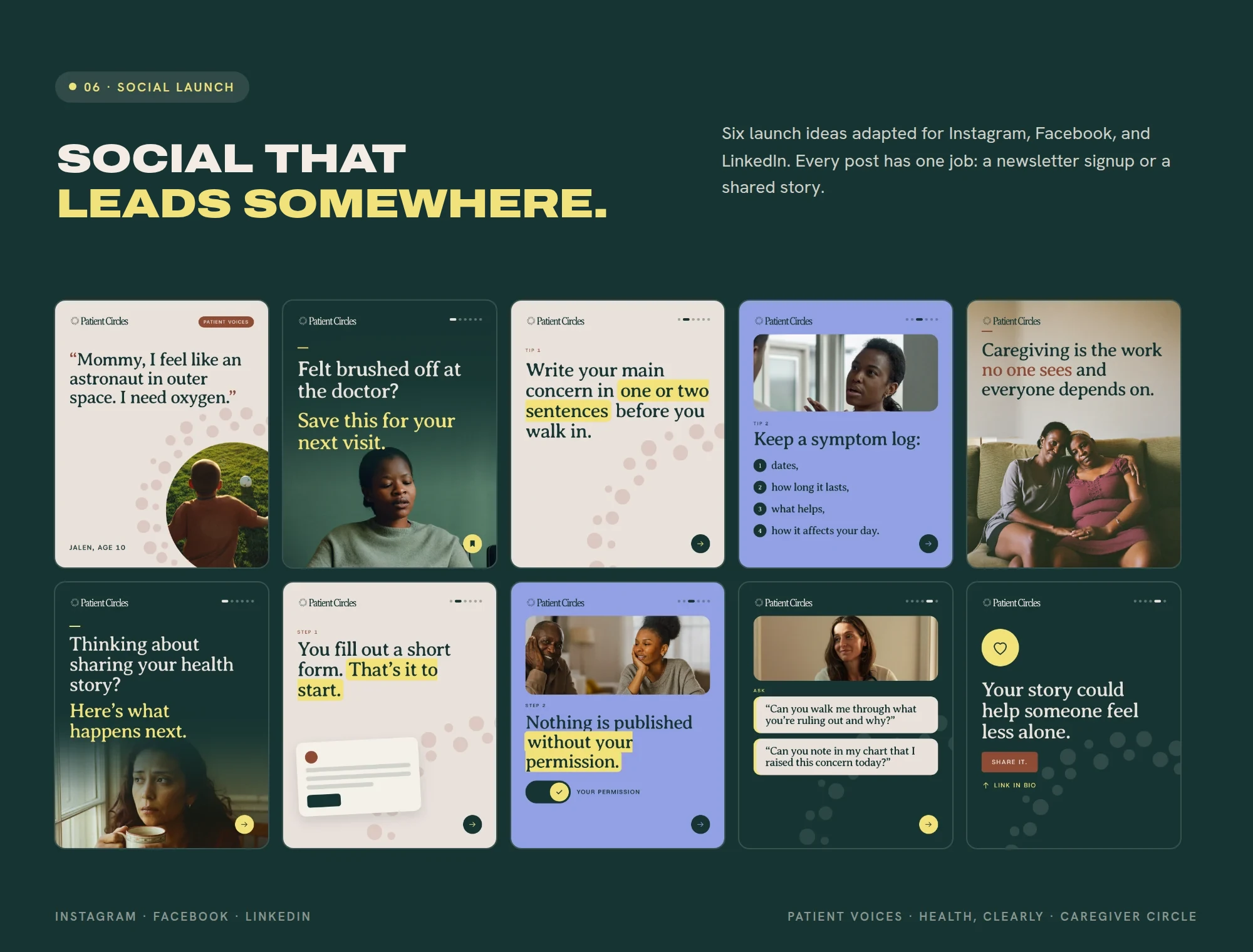
Email platforms charge mostly by contact count. SMS platforms charge by message, with costs rising for MMS and international texts. Management costs depend on how many flows and campaigns you run. See email and SMS marketing costs for ranges, and the complete email and SMS guide for the full setup. We built a newsletter and CRM-connected welcome email for MD Newsline's Patient Circles, a good example of email-first done well.
Budgeting? See email and SMS marketing costs. Before texting, review SMS marketing rules, and see med spa marketing for an appointment-based example.
Frequently asked questions
Is SMS marketing better than email?
Neither is better overall. SMS earns higher click rates for short, timely messages. Email is cheaper and better for longer content and education. Most businesses benefit from both.
How many marketing texts should a business send per month?
Two to four marketing texts a month is a common ceiling for small brands, plus transactional and flow messages. Watch your opt-out rate and adjust.
Can I text customers who gave me their phone number at checkout?
Not for marketing unless they gave prior express written consent to receive marketing texts. A phone number for order updates is not consent for promotions.
Do I need separate consent for email and SMS?
Yes. Collect SMS consent separately, with clear disclosures about message type, frequency, rates and how to opt out.
Keep reading
Email and SMS Marketing for Small Businesses: The Complete Guide How small businesses can build email and SMS marketing that drives revenue: list growth, automated flows, campaigns, consent, benchmarks and costs.
SMS Marketing Rules for Small Businesses: Consent Basics Plain-language U.S. SMS marketing rules for small businesses: TCPA consent, disclosures, quiet hours, opt-outs and the 2026 FCC update. Not legal advice.
Welcome Email Sequence: Examples and a 5-Email Template A proven 5-email welcome sequence template for small businesses, with timing, subject line ideas, examples and benchmarks for clicks and revenue.
How Much Do Email and SMS Marketing Cost? Email and SMS marketing costs for small businesses: platform fees, per-text costs, agency retainers and how to budget for a program that pays for itself.
Want email and SMS that sell while you sleep?
Our email and SMS programs run $1,500 to $4,000 a month and start with the automated flows that drive the most revenue.

Erika Gardner, Founder and Chief Strategist, The Vibe Curator co.
Erika Gardner founded The Vibe Curator co. in 2016. She leads brand strategy, websites, email and SMS, and fractional CMO work for growing brands from offices in Houston and Atlanta.
Read Also


