Brand Management for Small Businesses: How to Keep Your Brand Consistent
What brand management means for small businesses, who should own it, the systems that keep a brand consistent and when to bring in outside help.

Brand management is the ongoing work of keeping your brand consistent, relevant and protected after it launches. For a small business, it means clear guidelines and templates, one person who approves anything public, a regular audit of every touchpoint, and a plan for how the brand evolves as you grow. Without it, even a great identity drifts within months.
Key takeaways
- Brand management starts after launch and never really ends.
- Name one brand owner who approves public-facing work.
- Templates and a shared asset library prevent most drift.
- Audit every touchpoint quarterly and fix the root cause, not just the symptom.
- Bring in outside help when you scale into new markets, partners or retailers.
In this guide
- What is brand management?
- Why does brand consistency matter?
- Who should own brand management in a small business?
- What systems keep a brand consistent?
- How does brand management change as you scale?
- What are the most common brand management mistakes?
- How does brand management work across channels?
- When should you bring in outside brand management?
- Frequently asked questions
What is brand management?
If brand strategy decides who you are and brand identity shows it, brand management keeps it true every day. It covers how your brand appears on your website, social, packaging, emails, proposals, signage, partner materials and customer service. See brand strategy vs brand identity for how the layers fit together.
Why does brand consistency matter?
Consistency builds recognition, and recognition builds trust. You will often see the claim that consistent branding increases revenue by 23 to 33 percent. As Showfolk explains, those numbers come from marketers' own estimates in Lucidpress surveys, not measured revenue. Marq reports that 77 percent of marketing leaders see off-brand content in the wild. Our stance: the direction is real, the exact percentage is not, and the cost of inconsistency shows up as confused customers and weaker pricing power.

Who should own brand management in a small business?
One person. In many small businesses, that is the founder at first. As you grow, it may be a marketing lead, an operations manager or an outside partner. The owner approves anything public, maintains templates and guidelines and decides when the brand should evolve. Learn more in what a brand manager does.
What systems keep a brand consistent?
| System | What it does |
|---|---|
| Brand guidelines | The rulebook for logo, color, type, imagery and voice |
| Template library | Ready-made social, slides, email and print files |
| Asset library | One shared home for logos, fonts and approved photos |
| Approval process | Who reviews what, and how fast |
| Content pillars | The themes you talk about, so content stays on strategy |
| Quarterly audit | A scheduled check of every touchpoint |
Start with brand guidelines and the brand consistency audit checklist.
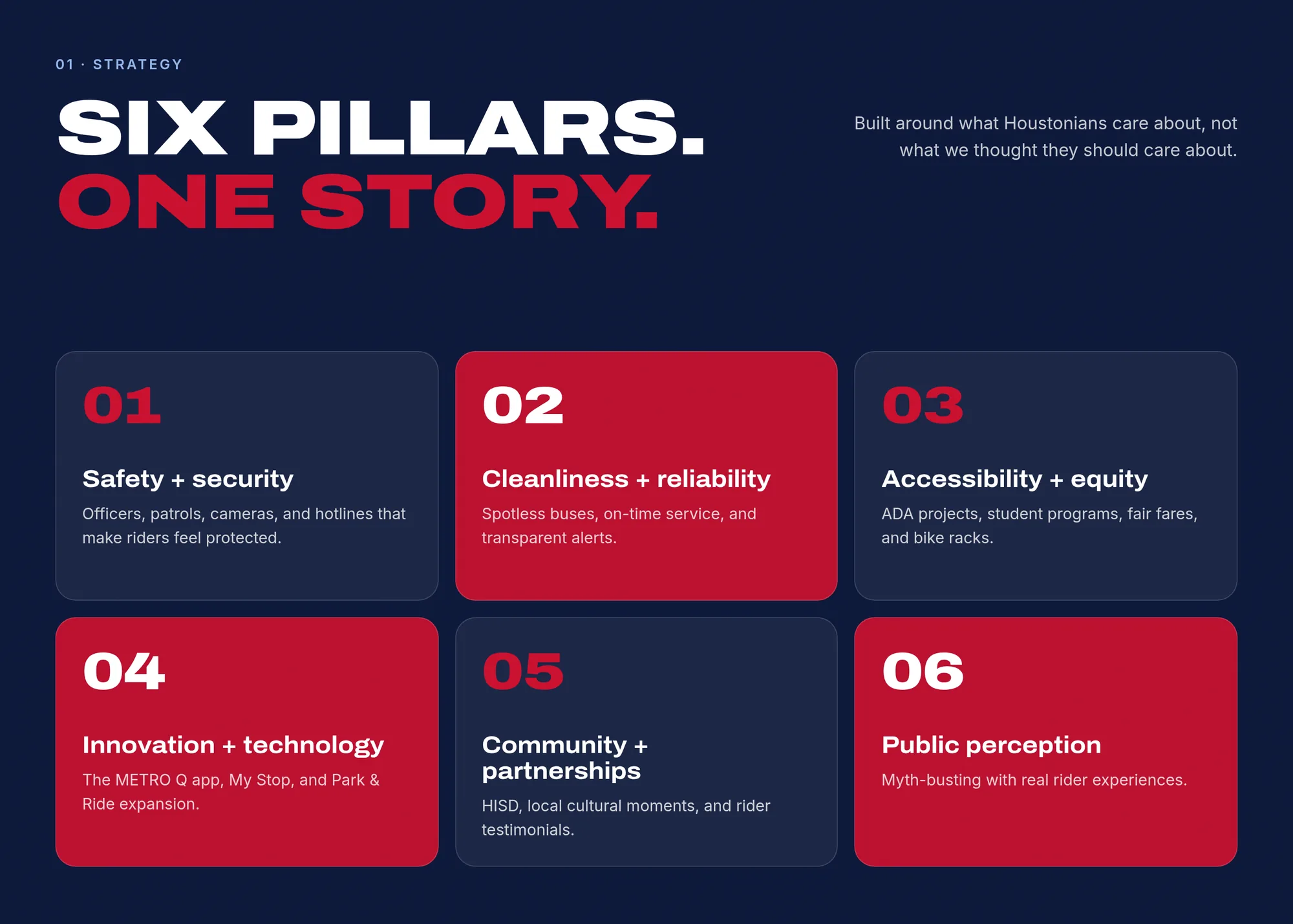
Content pillars matter more than most people expect. For Houston METRO, a six-pillar social strategy gave every post a clear job, and Instagram grew from 4.5K to more than 10K followers in under 90 days.
How does brand management change as you scale?
New markets, retailers, distributors, creators and partners all multiply the number of people touching your brand. When we took on brand management and business development for Aunt Jackie's Curls and Coils, a brand now sold in more than 89 countries, the job was keeping packaging, imagery and messaging consistent across markets while supporting growth conversations, including investor interest.
At that stage, brand management includes partner guidelines, retailer asset kits and approval workflows for co-branded work. See brand collaboration examples for how partnerships can strengthen a brand when they are managed well.
What are the most common brand management mistakes?
- No owner. Everyone can post, so no one is accountable.
- Guidelines nobody can find. Pin them, link them and onboard with them.
- Templates that are harder than starting fresh. Make the right way the easy way.
- Letting old assets live forever. Old flyers, outdated bios and retired logos keep circulating.
- Never evolving. Consistency is not the same as standing still. Refresh when needed. See rebrand vs refresh.
How does brand management work across channels?
Each channel has its own format, but the brand should feel the same everywhere. Our guide to keeping your brand consistent across social, website and email walks through each one.
When should you bring in outside brand management?
- You are entering new markets or retailers
- Multiple vendors, freelancers or creators produce your content
- Your founder is the bottleneck for every approval
- You are preparing for investors or a sale
Our brand management services cover guidelines, templates, approvals, audits and ongoing creative direction. If you also need marketing leadership across channels, a fractional CMO can own the bigger picture. Start with the free Brand Gut Check to see where you stand.
Frequently asked questions
What does brand management include?
Maintaining guidelines and templates, approving public-facing work, auditing touchpoints, managing partner and creator use of the brand and planning how the brand evolves.
Is brand management the same as marketing?
No. Marketing drives demand. Brand management protects and develops the brand that all marketing uses. They work together.
How often should a small business audit its brand?
Quarterly is a good rhythm, plus a full review once a year or before any big launch.
Can a small business manage its brand without a brand manager?
Yes. Name one owner, use templates and guidelines and run a quarterly audit. Bring in help when you scale or when approvals become a bottleneck.
Keep reading
Brand Consistency Audit: A 20-Point Checklist A 20-point brand consistency audit checklist for small businesses covering website, social, email, print, Google Business Profile and team materials.
What Does a Brand Manager Do, and When Do You Need One? What a brand manager does day to day, the skills involved, how the role differs from a marketing manager and when a small business should hire one.
How to Keep Your Brand Consistent Across Social, Website and Email A practical guide to keeping your brand consistent across social media, your website, email, SMS and in person, with channel-by-channel checklists.
Brand Guidelines: What to Include, With Examples What brand guidelines should include, how long they should be and how to make them usable, with a section-by-section template for small businesses.
Is your brand showing up the same way everywhere?
Take our free Brand Gut Check to see where your brand is strong and where it is leaking trust.

Erika Gardner, Founder and Chief Strategist, The Vibe Curator co.
Erika Gardner founded The Vibe Curator co. in 2016. She leads brand strategy, websites, email and SMS, and fractional CMO work for growing brands from offices in Houston and Atlanta.
Read Also


